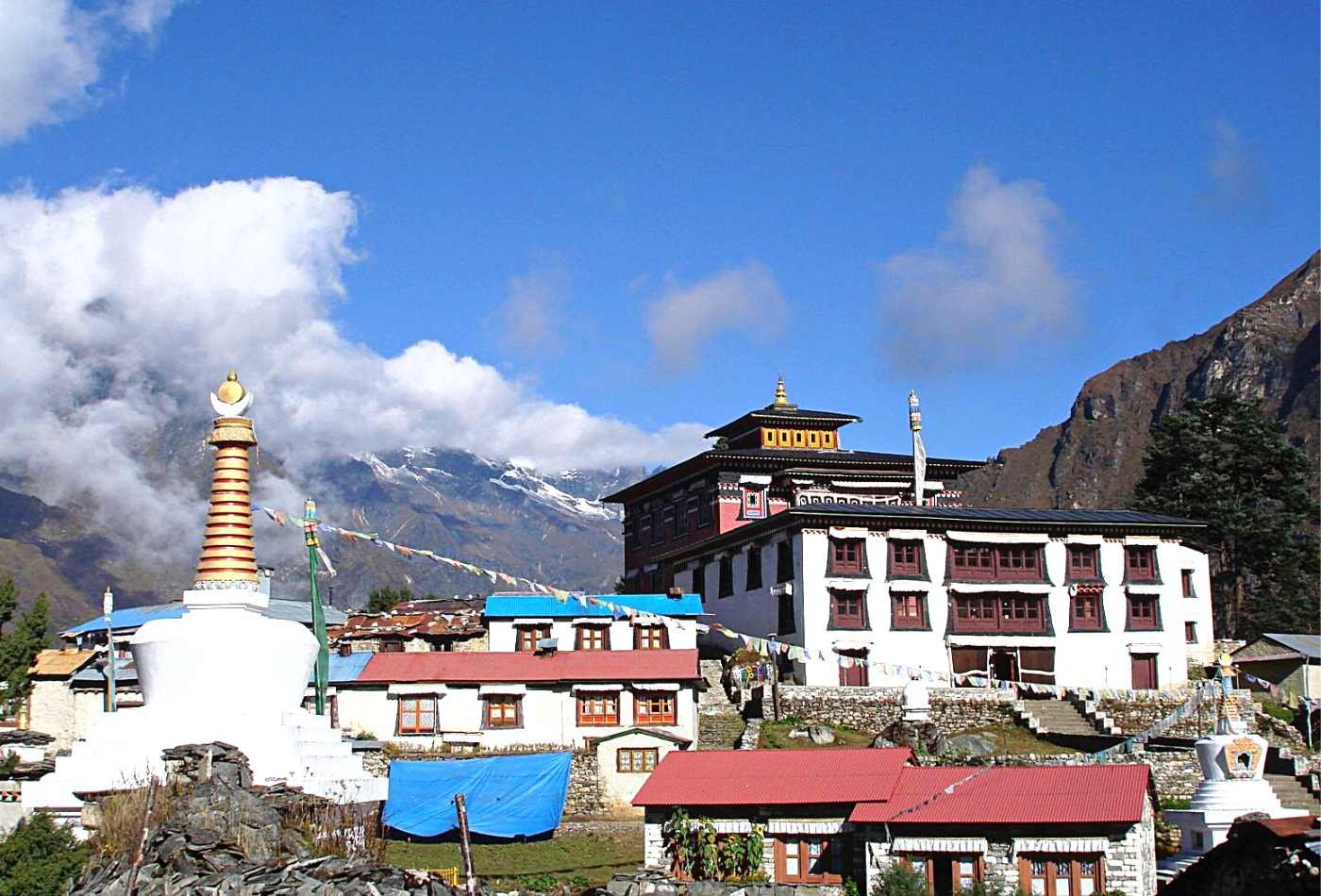
Tengboche Monastery, a traditional Tibetan Buddhist monastery located on the trek to Mount Everest Base Camp with red roof and white stupa.
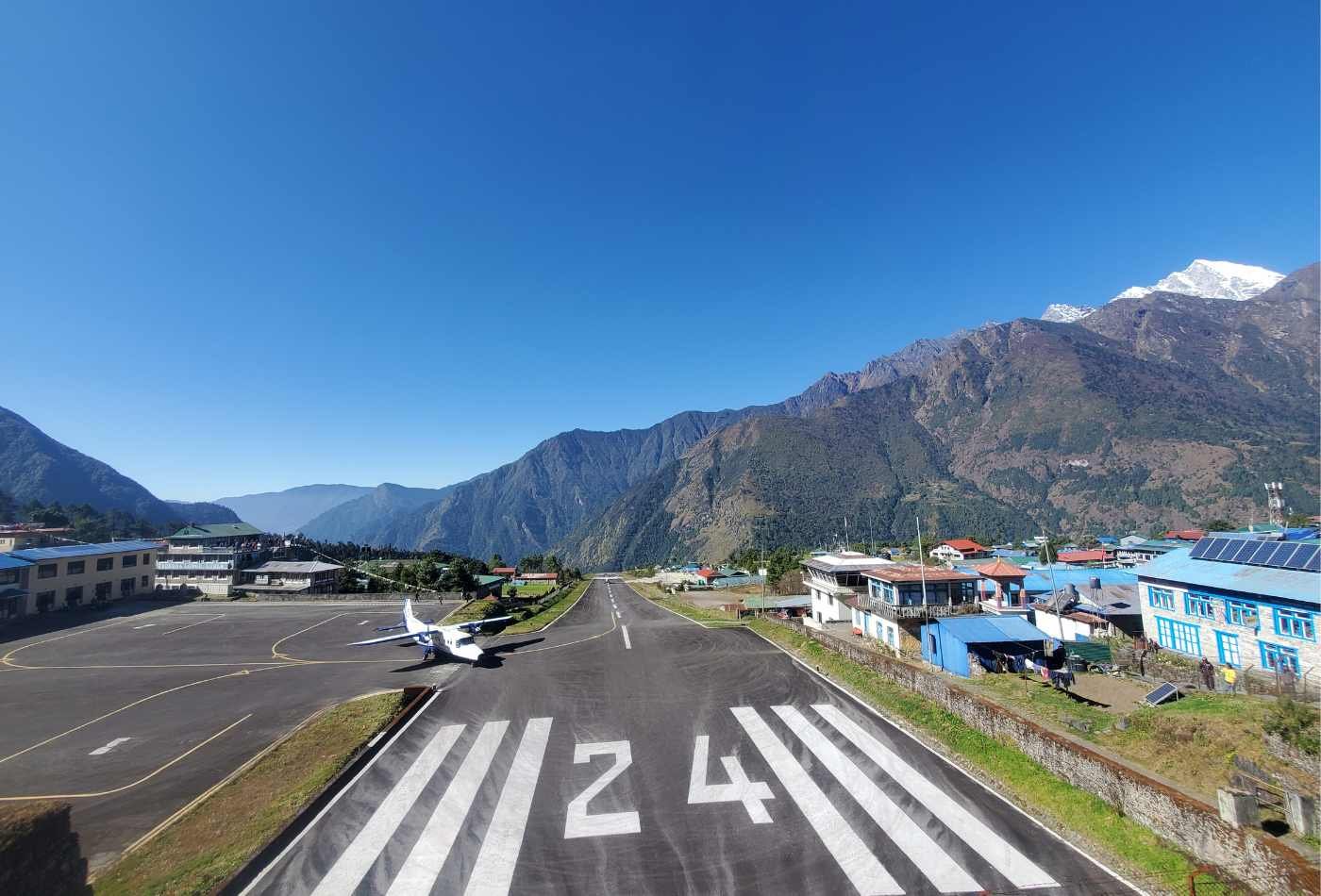
Lukla Airport, a small mountain airport with an airplane ready for take-off on a clear day, providing access to the trekking routes to Mount Everest.
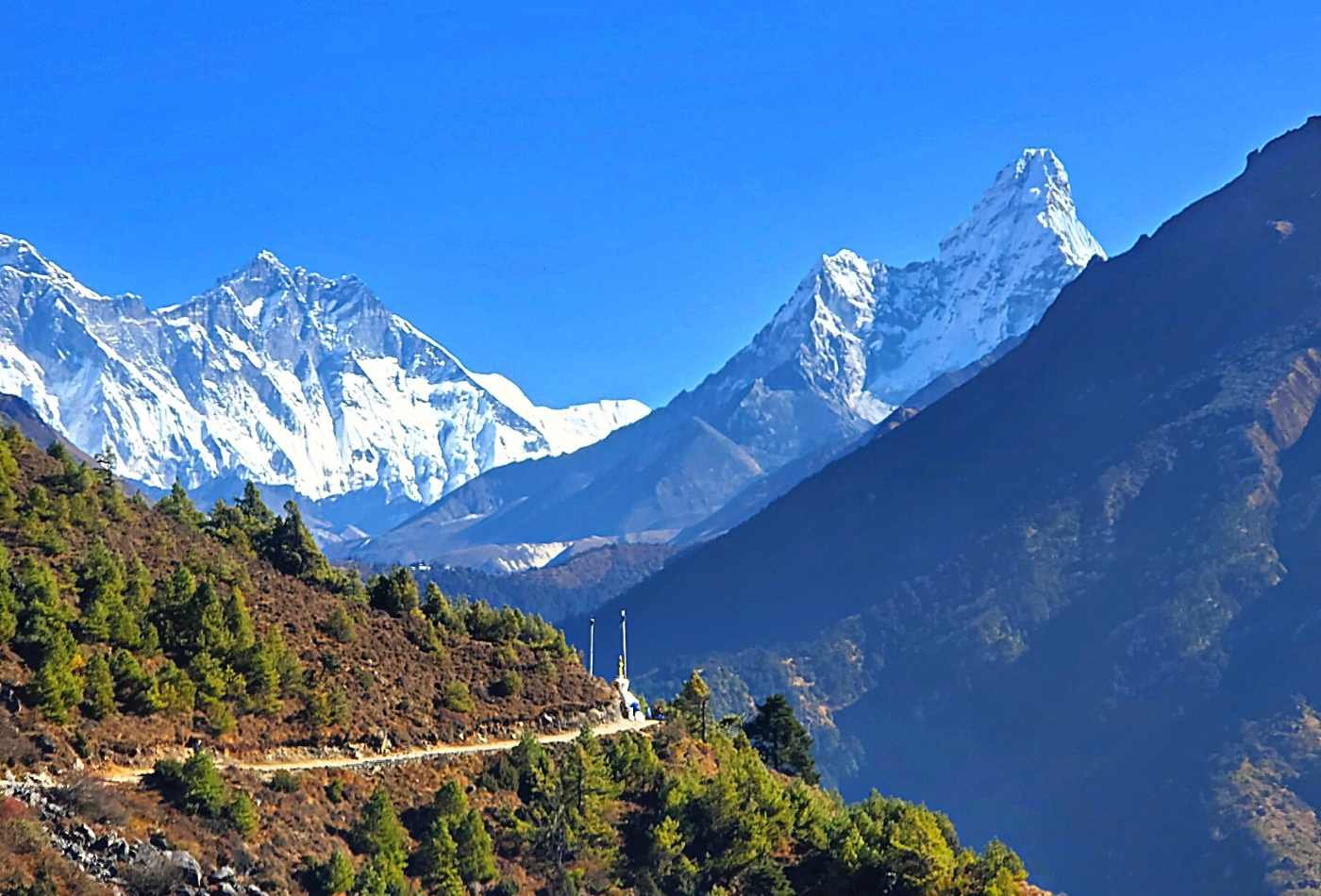
View of Mt. Amadablam and Mt. Lhotse from Namche Bazaar, a picturesque mountain village, on a clear day with clear visibility of the peaks.
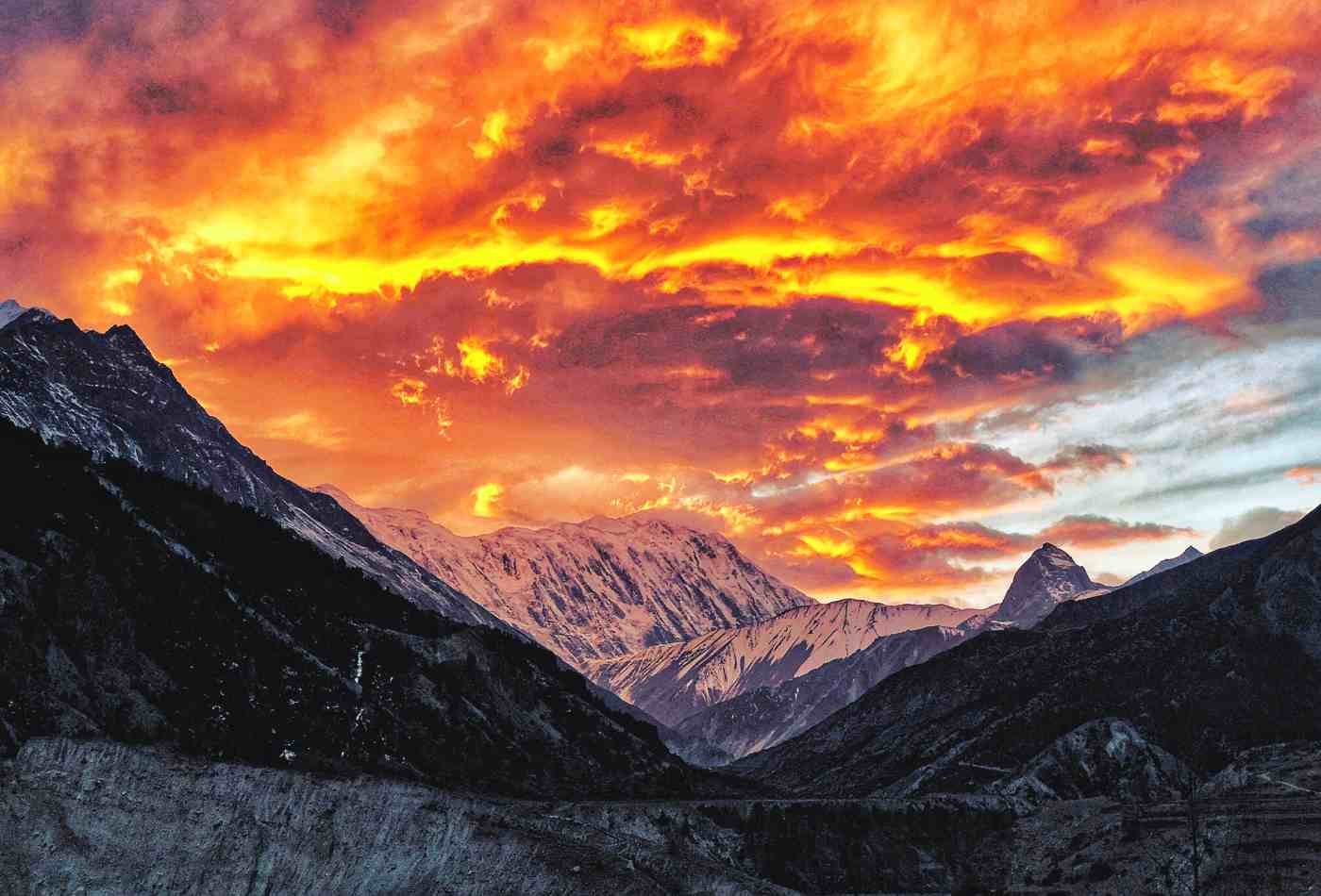
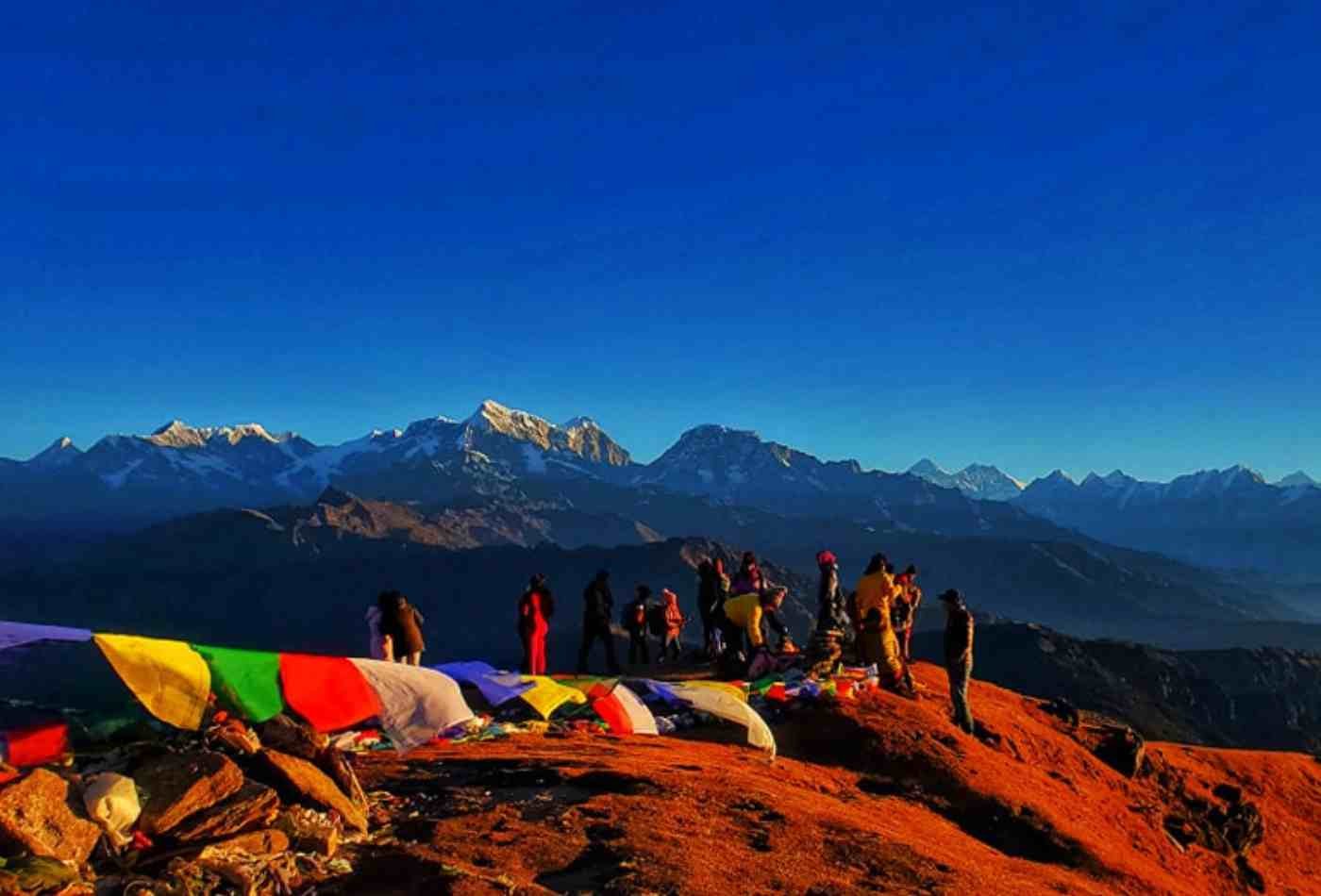
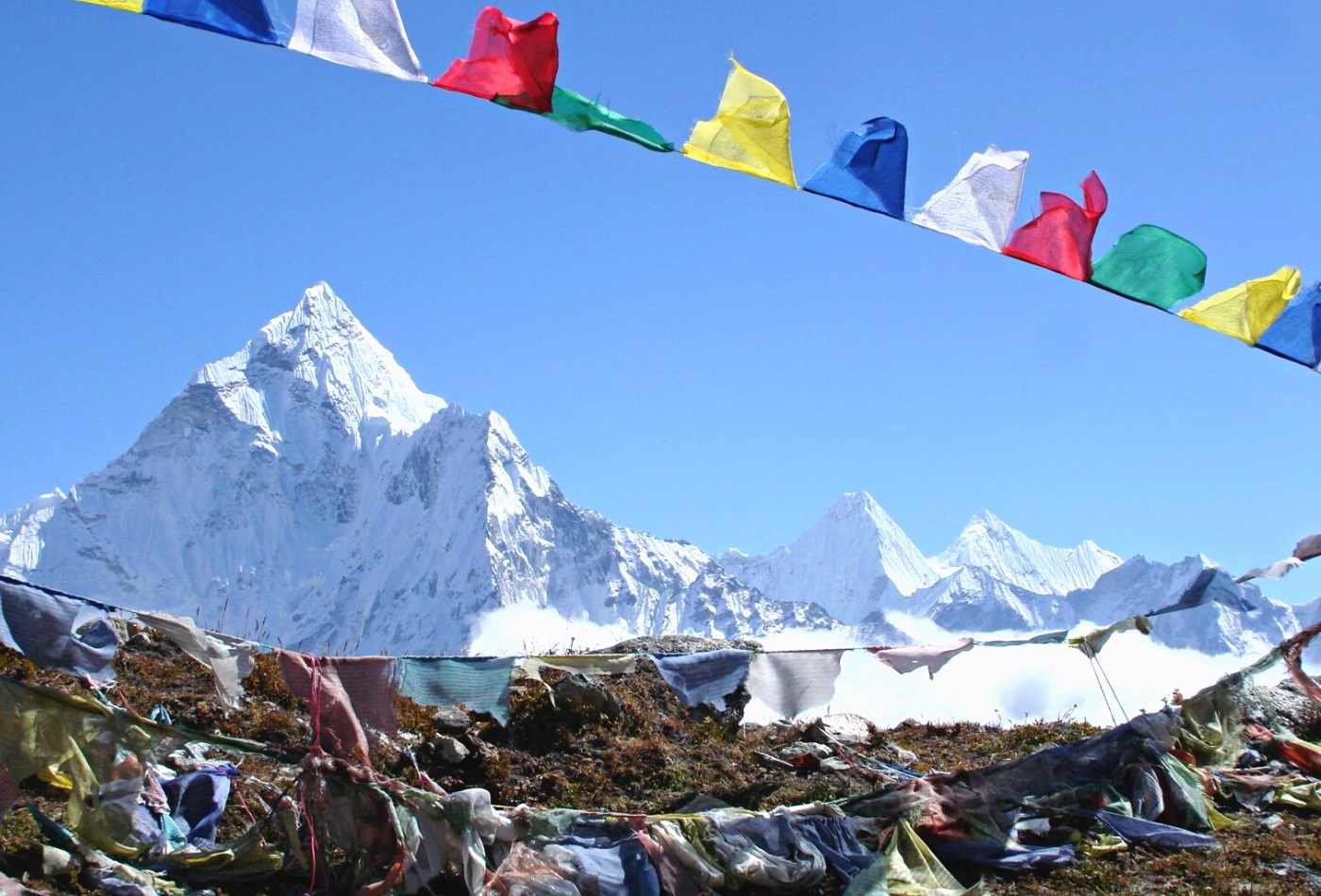
Mt. Amadablam as seen from Thukla, with colorful prayer flags placed in front of the mountain, offering prayers and good wishes.
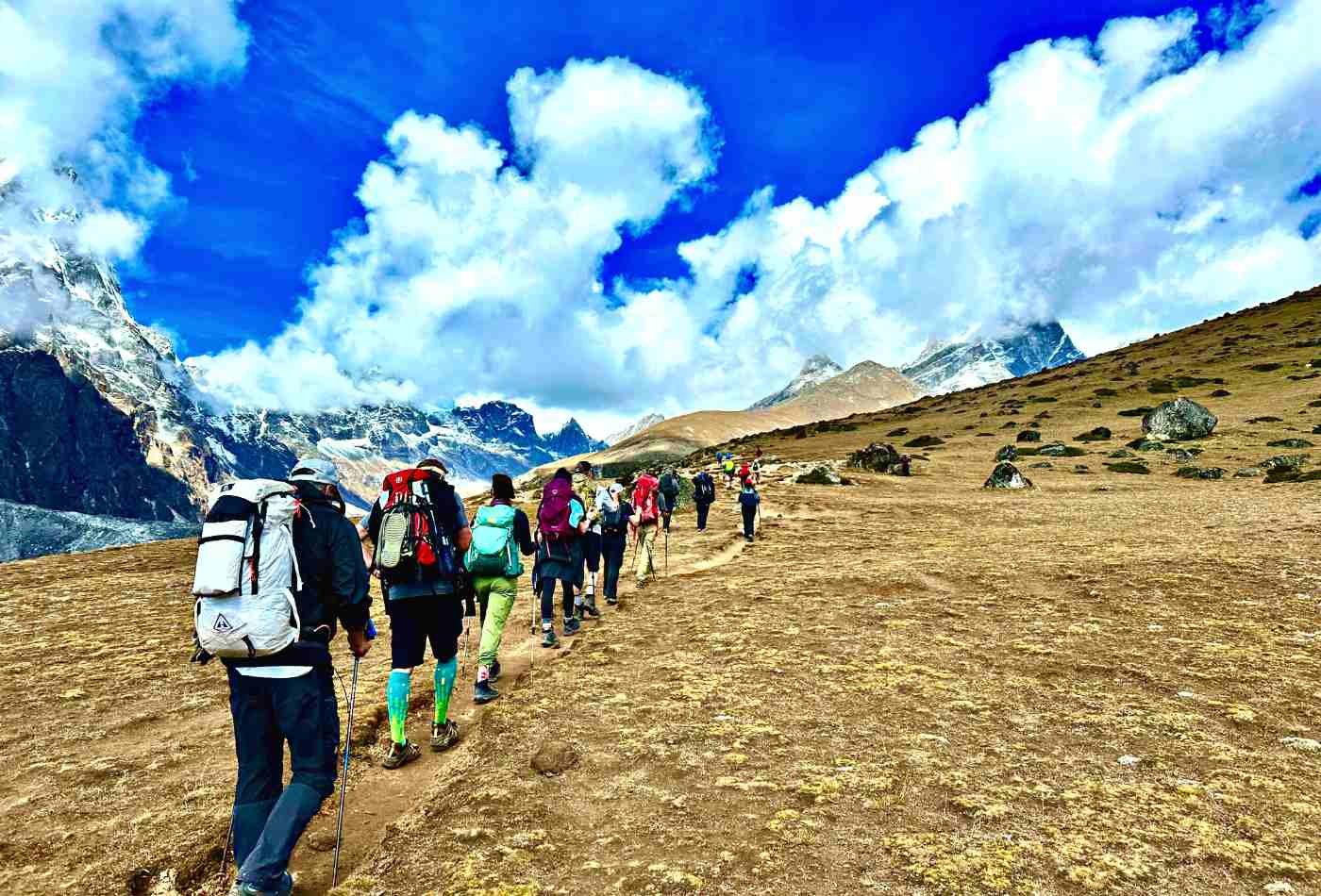
Group of trekkers standing in a queue, making their way to Mount Everest Base Camp, surrounded by the majestic Himalayan peaks.
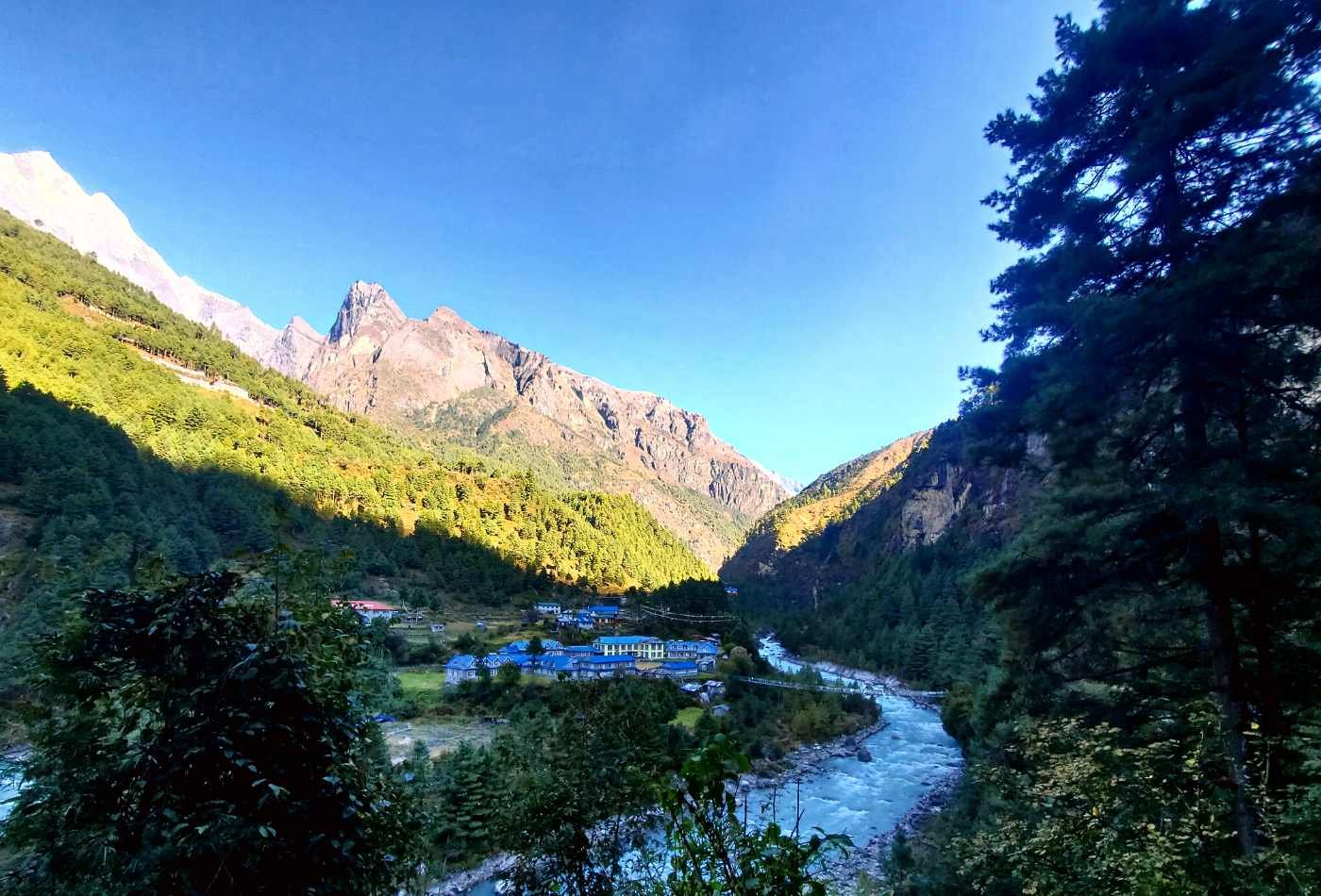
The village of Phikding bathed in the warm light of sunrise, with the Dudh Koshi river flowing by the side of the village.

EVEREST BASE CAMP TREK 14 DAYS 

TRIP HIGHLIGHTS

  • Trek to the world's highest peak Base Camp
  • Conquer high passes and glaciers
  • Visit Sherpa villages and meet local
  • One of the World's Most Famous Treks
  • Visit Hindu & Buddhist Temples, Monasteries 
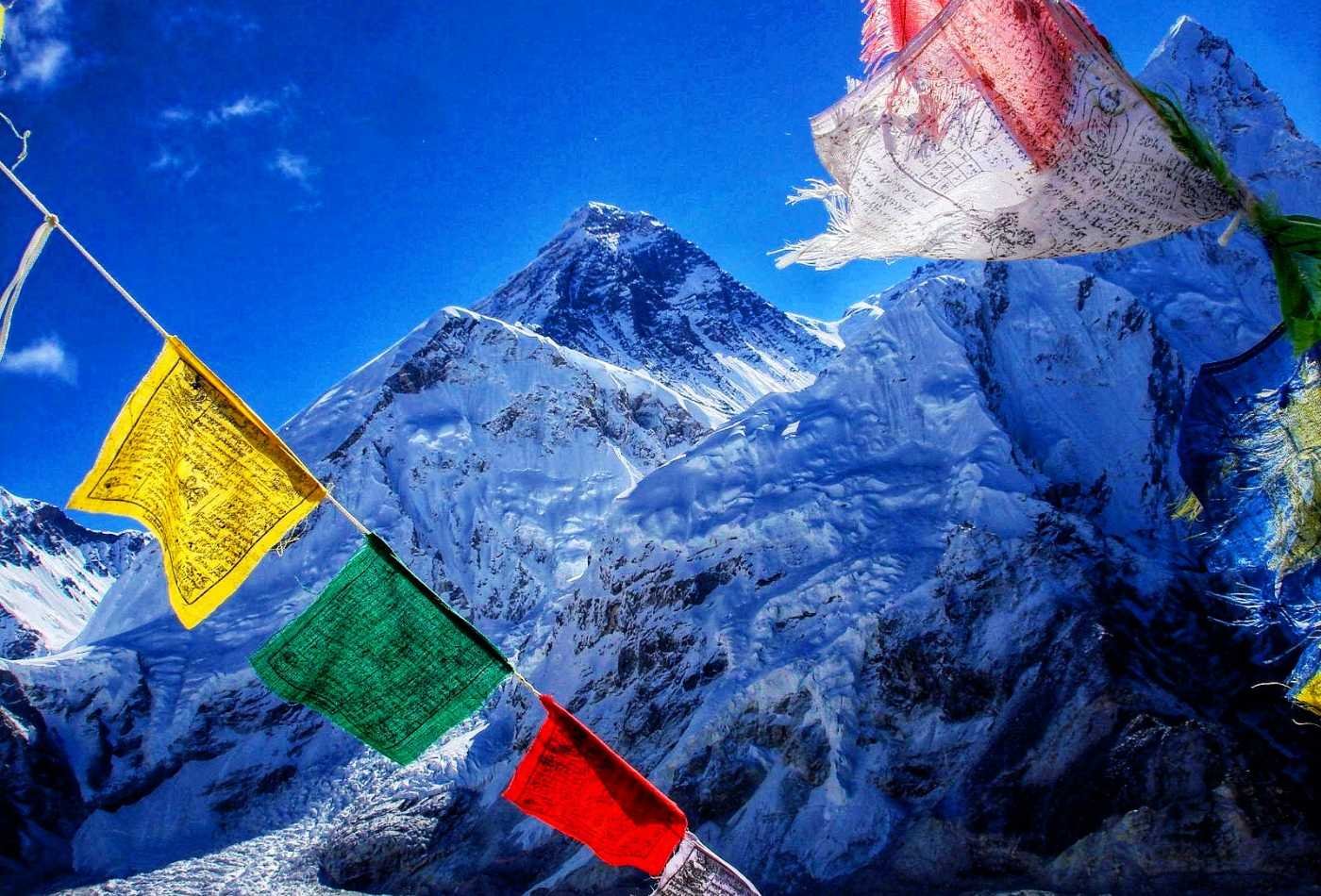
Mt. Everest
Return Guests get a 10% discount on all Trips!
  • Trip Type:

    Trekking

  • Group Size:

    2-12 Trekkers

  • Best Season:

    Spring & Autumn

  • Max Altitude:

    5,364 meters
    17,598 feet

  • Start-End:

    Kathmandu

  • Daily Activity:

    Approx 6-7 hrs hike

Location:

Sagarmatha National Park, Solukhumbu, Nepal

  • Fly into Tribhuvan International Airport (KTM)

DESCRIPTION

The Everest Base Camp Trek is a once-in-a-lifetime experience that takes you to the base of the tallest mountain in the world, Mount Everest. The "Budget Everest Base Camp trek" offers the same quality guide service as any other trek but with the added benefit of being cost-effective. The food and hotels in Kathmandu are not included in the package, giving trekkers the flexibility to choose their dining options and accommodations, thereby allowing them to control their expenses.

This trek takes you through some of the most breathtaking landscapes in the world, including lush forests, rhododendron flowers, and alpine meadows. Along the way, you will also have the opportunity to interact with the local Sherpa people and learn about their rich culture and traditions. The trek leads you to the base camp of the world's tallest mountain, Mount Everest, which is located at an altitude of 5,364 meters (17,598 ft) above sea level.

The trek is physically demanding, so it is important to have a reasonable fitness level and prior hiking experience. However, with the support of experienced guides, you can make the journey to the base camp of Mount Everest, an achievement that will be remembered for a lifetime.

The "Budget Everest Base Camp trek" is an excellent opportunity for those who want to experience one of the world's most popular and challenging hikes without breaking the bank. So, gather your hiking gear and join us on this adventure to the roof of the world!

TRIP ITINERARY

DAY- 1: ARRIVE IN KATHMANDU

Based on your flight arrival schedule, a representative from Imperial Expedition will pick you up at the airport and take you to your hotel. In the evening, a group dinner will be followed by a briefing to prepare you for the trek. You will have to make arrangements for your hotel accommodation in Kathmandu.


DAY- 2: Fly to Lukla & Trek to Phakding (9,190ft/2,800m)

Get ready for the most exhilarating part of the trek as we fly to Lukla and begin our exciting trek towards beautiful, remote villages. Passing through pine forests and crossing suspension bridges, we pass through some of the most scenic areas on our trip. We spend a night in Phakding 8,701ft/2,652m) before continuing to Namche Bazaar.

Accommodation: Local Guest House

(Note: if the flight cancels due to weather or any causes, we will prepare for the next day. We will try by helicopter, which adds an extra cost of around $500 per person. It’s slightly changing in the itinerary of the trek. 


DAY- 3: Day 3, Trek To Namche Bazaar (11,285ft/3,440m)

On your trek up to Namche Bazaar, you'll be treated to spectacular views of Everest and other Himalayan giants. The first part of today's walk is through beautiful forests with glimpses of the mountains ahead. We cross the river several times by bridge as we pass through the villages of Benkar, Monzo, and Jorsale. A final bridge brings us to the foot of the steep climb to Namche. Halfway up the ascent, we may get our first glimpse (cloud permitting) of the Everest summit behind the grand ridge of Nuptse-Lhotse. After hours of climb brings us to Namche Bazaar, a Sherpa town buzzing with trekkers and climbers during summer months but otherwise visited mainly by locals, traders, and travelers passing through.

Accommodation: Local Guest Hosue 
 

DAY- 4: Acclimatization Day

You’ll stay at Namche Bazaar for another night so that you can properly acclimatize to the altitude. One of the best ways to do this is to take a strenuous walk up to a high altitude and then come back down to sleep.

Accommodation: Local Guest House 

DAY- 5: TREK TO TENGBOCHE (12,867ft/3,867m)

From Namche Bazaar the trail follows the side of the valley, providing views of famous peaks such as Mount Everest, Lhotse, Nuptse, and Ama Dablam. The trek passes by several villages and tea shops and eventually descends steeply to the village of Phunki Tenga, where you can stop for lunch. After resting, you will then make a steep climb to the village of Tengboche, which is known for its large and famous monastery.

Accommodation: Local Guest House

DAY- 6: TREK to Dingboche (14,270ft/4,350m)

Today the trek starts with a descent through the forest to the village of Debuche and then crosses the Imja Khola river. After following the valley, the trail leads to the village of Pangboche, the highest permanent settlement in the area. The trail then ascends with a lunch stop in Shomore, after which the trees become less frequent. The trek crosses a wooden bridge at the confluence of the Khumbu and Imja Khola rivers and then makes a short but steep climb to the summer settlement of Dingboche. Towering peaks surround this village.

Accommodation: Local Guest House 


DAY- 7: ACCLIMATISATION DAY

A day for rest and acclimatization, After breakfast, we will climb Nangkartshang Peak, which stands at an elevation of 16,730 feet. The hike takes around 3-4 hours to reach the top and offers breathtaking views of the surrounding peaks, such as Makalu, Lhotse, Chalotse, Tawoche, and Ama Dablam. After returning to Dingboche for lunch, the afternoon will be free for relaxation.

Accommodation: Local Guest House


DAY- 8: TREK TO LOBUCHE (16,175ft/4,930m)

The trail starts in Dingboche, goes past a chorten, and ascends gradually to Dugla, where trekkers take a break for lunch. Then trail zigzag through the boulders of the glacier's terminal moraine. At the top of this climb, there are many stone cairns built as memorials to the climbers who have lost their lives while climbing Mount Everest. The trail then gently climbs along the glacier and reaches Lobuche.

Accommodation: Local Guest House 

DAY- 9: Trek to Everest Base Camp; overnight at Gorak Shep (17,008ft/5,184m)

The next stop on the trek is Everest Base Camp, which is reached by following the Khumbu Glacier. The trail provides great views of the surrounding mountains and has to rise to cross a tributary glacier. We stop for lunch at Gorak Shep before making the journey to Everest Base Camp 17,598 feet. The trail to Base Camp is several hours long and involves navigating through ice pinnacles and past crevasses on the Khumbu Glacier. After a short photo stop by the Base Camp rock, we retrace our steps to Gorak Shep.

Accommodation: Local Guest House

DAY- 10: ASCEND KALA PATTAR – TREK TO PHERICHE

The trek to Kala Pattar  18,192ft (5,545m) from Gorak Shep is a challenging climb to the small peak that offers stunning views of the Khumbu Glacier and the highest mountain in the world, Mount Everest. We return to Gorak Shep and retrace our steps to Lobuche for lunch then continue to Pheriche for the night.
Accommodation: Local Guest House

DAY- 11: TREK TO NAMCHE

The trek from Pheriche involves descending to cross the river, then climbing back up through the rhododendron forest to reach Tengboche. From Tengboche, the trail descends over the Dudh Koshi river and continues back to Namche.

Accommodation: Local Guest House

DAY- 12: Trek to Lukla

last day of trekking follows the Dudh Koshi river back to Lukla. This evening provides a chance to celebrate with the Sherpa guides and porters, reflecting on the memorable trekking experience.

Accommodation
: Local Guest House

DAY- 13: FLY TO KATHMANDU

After breakfast, we will fly back to Kathmandu from the Lukla airstrip.

(Note: if the flight cancel due to weather or any causes, we will try by helicopter which adds an extra cost of around $500 per person.


DAY- 14: FINAL DEPARTURE

It's time to head back home a representative from Imperial Expedition will provide transportation to the airport 3 hours prior to the flight schedule.

TRIP DETAILS

WHAT'S INCLUDED

✅ Airport Pick Up and Drop.
✅4 nights hotel in Kathmandu on a bed &  breakfast Basis- Twin Bedroom.
✅ Breakfast, Lunch, and Dinner, including tea and coffee during the trek.
✅ Accessible accommodation at Hotel/Lodge during the trek.
✅ Experienced trekking guide porter for two trekkers during the trek.
✅ Salary, allowance, and Insurance for all involved staff during the trek.
✅ National Park fees, trekking permit.
✅ Roundtrip Kathmandu - Lukla domestic airfare.

WHAT'S NOT INCLUDED

❎ International flight and departure tax
❎ Lunch and dinner in Kathmandu
❎ Personal trekking gear and clothing (sleeping bags available for rent)
❎ Tips and personal expenses
❎ Travel/medical/emergency evacuation insurance
❎ Extra nights’ accommodation in Kathmandu. In case of early arrival or late departure, early return from Trekking (due to any reason) than the scheduled itinerary
❎Any other item not listed in the “Price Includes” section


WHAT GEAR TO BRING

Once you book  this trek you’ll receive access to a printable, downloadable trip information packet with a detailed packing list

FAQ

How do I sign up for a trip?

Booking a trip is easy. Call us at 734-997-7229 or  303-834-5512, or Email us at info@imperialexpedition.com. Online bookings are made via the ‘Book Now button available on each trip page. Once we confirm your booking, we’ll send you comprehensive information regarding visas, vaccinations, gear, clothing, and arrival details to ensure you are fully prepared for your adventure.

How fit do I need to be to trek in the Himalayas?

You should be moderately fit, exercise regularly, and enjoy active vacations and walking and hiking in mountainous terrain.  For the Everest base camp trek, you should be able to run for an hour without stopping at any speed and still feel good to continue – OR – walk for 5-6 hours in a day with rests.  Trekking is an endurance sport.  Mostly you need a good attitude, which will go a long way toward the success of reaching your goal.

When is the best time to trek and climb in the Himalayas?

  • Fall (September-November):  Fall is considered the best time for trekking in Nepal.  The weather is excellent at this time, allowing for clear blue skies and tantalizing mountain views.  Temperatures are moderate.  Occasional short storms may bring snow to higher altitudes.

  • Winter (December-February):  Winter brings heavy snowfall mostly at higher altitudes.  This can be a good time for cultural tours and trekking at lower elevations.

  • Spring (March-May):  Spring is a good time for trekking and climbing in Nepal and Tibet. The rhododendrons, the national flower of Nepal, make the hillsides a colorful paradise during the spring.  It is mildly warm at lower elevations and at higher elevations, the mountain views are excellent while the temperature is quite moderate.  If you trek to Everest base camp in the spring, you will have the opportunity to meet world-renowned climbers, as several Everest expeditions will be assembled at base camp.

  • Summer/Monsoon (June-August):  The monsoon during the summer months can make travel in Nepal wet, muddy, warm, and often humid.  Strong monsoon rains don’t usually last long, and often end with large and wonderful rainbows.  However, the streets in Kathmandu can be muddy and landslides sometimes occur in the mountains.  It is recommended to carry insect repellent when trekking during these months.

What sort of experience do your guides have?

Our guides are dependable, competent, and highly qualified with more than ten years of trekking experience, leading trips, treks, climbs, and expeditions in the Himalayas.  Our guides speak English and the local language.  We are trained in first aid and CPR. Most importantly, our guides are friendly and enjoyable and are passionate about sharing the rich cultures, traditions, and natural beauty of Nepal.

What is the routine on the trek?

Most trekkers normally start their day early around 7:30 to 8:30 am after a hot breakfast.  The morning sun offers nice mountain views.  You will carry a light pack for your camera, water, a jacket, and a wind layer.  Around noon we will reach the lunch stop where we will spend time drinking tea, resting, and having lunch.  After lunch, we normally walk for 2 to 3 more hours before arriving where we will stop for the evening.  Here at the lodge we will have hot tea and relax for the rest of the day.  Our day ends with dinner and then off to bed in single or double rooms in the trekking lodge.

What type of shoes or boots should I wear?

The proper footwear depends on the trek and on the trekker.  Most hikes can be done in comfortable running shoes while longer more strenuous treks may require sturdy but lightweight hiking boots.  It is best if you purchase shoes and boots long before arriving in Nepal.  We advise that you wear your boots prior to the trek to break them in – in order to prevent blisters, which can be debilitating on the trail.

How big will the group be?

We try to bring together a small group of like-minded people.  Our trekking groups are generally from 6 to a maximum of 12 members, although we can accommodate smaller groups and solo trekkers as well.

Do you arrange private or family treks?

Yes, if you would like to travel independently or with friends, family or colleagues, you are invited to choose the trip that best suits your group and the trip dates according to your schedule.  We are happy to consider any number of trekkers.  Our maximum is not more than 50 at a time.  The cost per person for private trips is negotiated on the basis of group size, trek area, and duration.

How long do we walk each day?

Our trips are classified into three categories according to the level of difficulty.  Easy adventure treks are about a week to 10 days in duration.  They generally don’t go above 13,000 feet (4,000m).  You can expect to be hiking/walking for around 4-5 hours a day.  Moderate to fairly challenging treks are longer treks that go into a high mountain country above 13,000 feet (4,000m).  Physically these trips are more demanding and tiring and may involve 6-8 hours of trekking along rocky trails in high Himalayan terrain.  Strenuous treks are longer treks that go beyond the normal activities of trekkers and tourists.  These include ice climbing and mountaineering expeditions.  Physically challenging, these trips may involve 7-9 hours of trekking in a day and are likely to include unfavorable weather conditions and strenuous activities.  Some level of experience may be required for these trips.

What type of food is served during a trek?

In general, while trekking breakfast may include a choice of porridge, muesli, omelet, fried or scrambled eggs with chapattis or bread.  Lunch and dinner are generally pasta, potatoes, or rice with or without cooked veggies and/or eggs.  Meat is also available, however, it is recommended to adopt a vegetarian diet.  As long as the meat is stored and cooked properly, meat dishes are also safe.  Tea, coffee, and hot chocolate are available at all meals.  Your guide will do his/her best to make sure all food is well cooked.  At some restaurants in Kathmandu, the vegetables are soaked in iodine and thus fresh salads are safe to eat.  While trekking it is best to avoid raw vegetables unless you can peel them yourself.  The rule is:  cooked, peeled, boiled – or forget it!  During the trek, you can choose what you like from the menu in the lodge.  There will also be plenty of snacks available such as biscuits, popcorn, candy bars, and soft drinks.  In some areas, you will find fresh fruit in season.

What if I have to cancel?

If you decide to cancel your trip, the following fees apply and are due to Imperial Expedition prior to departure when we receive written notice of your cancellation. Cancellation Fee Schedule for tours and treks:

  • 90-81 days prior to departure You forfeit half the deposit
  • 80-60 days prior to departure You forfeit the deposit
  • 59-31 days prior to departure You forfeit 50% of the total amount
  • 30 or fewer days prior to departure You forfeit the entire cost of the trip

Cancellation Fee Schedule for Climbing Trips and Expeditions:

  • 180-150 days prior to departure You forfeit
  • 149-89 days prior to departure You forfeit 50% of the total amount
  • 90 or fewer days prior to departure You forfeit the entire cost of the trip


What are the overnight accommodations like?

In cities, you will be staying in hotels and guesthouses that are similar to those in the US with private bathrooms, showers, TV, phone, AC, etc.  If you prefer luxury hotels we can make those arrangements as well.  While trekking in the mountains the accommodations will depend on whether you are camping or teahouse trekking.  If you are on a camping trek, then you will be sleeping in a tent.  The trekking lodges or teahouses are simple shelters.  There is no central heat.  In the dining room where meals are served, there is often a wood-burning stove that heats that room only.  The guest rooms are not heated so you will need a good quality sleeping bag, which can be rented in Kathmandu.  The guest rooms are usually small and sleep one or two trekkers.  The walls are thin so earplugs are a good idea for light sleepers.  The bathrooms are down the hall or outside.  Nowadays, there are also a few ‘luxury’ establishments along the popular trekking routes.  If you are interested to upgrade, let us know and we can make those arrangements. 

What happens in case of an emergency?

In the case of a serious illness or a life-threatening emergency during your trek, a helicopter rescue will be initiated.  You are responsible for all the expenses incurred in such an evacuation.  It is required that you have insurance that covers emergency helicopter evacuation throughout your trip.  However unlikely, we are prepared for emergencies, and your guide will respond quickly to get any necessary medical help.  We aim to avoid such circumstances with education and a large dose of preventative medicine.

Can I get a Nepal visa on arrival?

Yes! A Nepal visa is easily available upon arrival at the entry places. Make the process easier by downloading & completing the application form, having the correct USD cash, and two passport photographs.Visa Facility Duration Fee.
  • Multiple entry15 daysUS$ 25 or equivalent Nepali currency.
  • Multiple entry30 daysUS$ 40 or equivalent Nepali currency.
  • Multiple entry90 daysUS$ 100 or equivalent Nepali currency.

Custom Declaration on Kathmandu, Nepal Arrival (For Foreign Nationals)

1. Travelers are required to declare goods in excess of permitted personal effects and duty-exempted consumable goods and restricted/prohibited goods and commercial goods at the red channel. Travelers possessing such goods may use the green channel.
2. Export or import of narcotics, arms and explosives, wildlife and its products, and commercial goods are restricted/prohibited. Attempt to import or export such goods may lead to confiscation of goods, penalty, and arrest resulting in prosecution.
3. Travelers are required to declare foreign currency at the red channel if the sum exceeds US$2000 or equivalent.
4. Permitted used personal effects are as follows in condition to return back at the time of departure:
1. Binocular one set.
2. Video Camera and still camera one set each.
3. Portable music system one set recorded media 10 pcs.
4. Cloths and goods of day-to-day use.
5. Perambulator and tricycle one set each.
6. Bicycle one set.
7. Watch one piece.
8. Cellular mobile phone one set
9. Professional hand tools are one set for professional personnel.
5. Duty-exempted consumable goods are as follows:
1. Whiskey/wine not exceeding 1.15 liters or beer up to 12 cans.
2. Cigarettes 200 sticks, cigar 50 sticks, tobacco 250 grams.
3. Camera film up to 15 pcs and movie film 12 reels.
4. Readymade and can foods not exceeding NRs.1000.00.
5. Medicine not exceeding Nrs.1000.00.
6. Fresh fruits not exceeding NRs.1000.00

Is it possible to deviate from the itinerary?

Our specific itineraries are custom crafted with you in mind.  Once we agree on a plan, we can always make minor changes and adjustments while en route.  The itinerary acts as a general plan for the trip.  However, there are often local events, festivals, or happenings that may capture our attention.  As long as everyone in the group agrees on these changes, that is fine.  Major changes to the itinerary may be made if there are political or environmental concerns.  Your guide will help to make any necessary adjustments.  Our trips are adventures that may take you into remote regions where unforeseen circumstances may contribute to the need for a change in the itinerary.

Any suggestions on what to do and what not to do with respect to the Nepalese culture?

Nepal has many diverse ethnic groups, traditions, and religions.  There are numerous cultural practices that may appear unusual to a person on his/her first visit to the country.
  • The most common greeting in Nepal is “Namaste” which is performed by placing the palms together and bowing as if praying.
  • Before entering a Nepalese home, temple or monastery remember to remove your shoes and place them neatly side-by-side.
  • Be careful not to use your spoon, fork, or hands to touch another person’s food, plate, cooking utensils, or even the serving dish.  Do not eat from other people’s plates and do not drink from other people’s water bottles or glasses.  This is considered to be impure by the Nepalese.
  • Never touch anything with your feet.  The feet and the floor are considered dirty.
  • While traveling, dress appropriately.  Women should avoid short skirts and sleeveless shirts.
  • Seek permission before entering a Hindu temple.  Many Hindu temples do not allow non-Hindus to enter.
  • Leather is prohibited inside temples because cows are considered sacred and are not used for slaughter.
  • Walking around temples or Buddhist stupas is traditionally done clockwise.
  • Be sure to ask before taking photographs of the locals.  Some people believe part of the soul is taken when a picture is snapped.
  • Public displays of affection between a man and a woman are frowned upon and are not generally accepted.
  • When the Nepalese shake their head from left to right, they may mean, “Yes”.
  • Develop a genuine interest in Nepal and meet and talk to the Nepalese people.  Do your best to respect their local customs and traditions.

Payment methods

For your convenience, we have different methods of payment as mentioned below. You can choose any of these methods:
1. Bank Transfer (ask for account info) 
2. Mail a check made out to 'Imperial Expedition' to Imperial Expedition  218 S. Main St. Ann Arbor, MI. 48104
3.  You can also pay by credit card, over the phone or online

What about transferring trips?

Tours and trekking trips may be transferred to the next year or to another date, however, the transfer must be made 90 days or more prior to departure.  Otherwise, if the transfer is made 90 days or less prior to departure, you must pay the cancellation fees as outlined above.  There are no fees for transferring trips more than 90 days prior to departure.  However, for climbing trips and expeditions, if you would like to transfer your trip to the next year or to different dates, there is an automatic transfer fee of $1,000 that must be paid to Imperial Expedition.

Should I purchase trip cancellation insurance?

If you must cancel your trip due to illness, injury, or death of yourself or an immediate family member, trip cancellation insurance protects all your deposits and payments for both air and land costs.  It is recommended that you buy trip cancellation insurance but not required.


What if Of Imperial Expedition cancels my trip?

Imperial Expedition reserves the right to cancel all or a portion of a trip due to political or environmental circumstances, which may hinder trip operations or for any other reasons beyond our control.  In the event of such a cancellation, we will give a full refund for the cost of the trip.  However, Imperial Expedition is not responsible for additional expenses incurred by you in preparing for the trip, visa fees, gear, insurance, or medical expenses prior to the trip.  If international air tickets have been purchased, the airline’s refund policy applies.

What other expenses should I consider?

Medical advice and inoculations, health and travel insurance, travel and trekking gear, international airfare, Nepali visas, airport tax, spending money, and most meals are not included in the cost of your trip.

How much should I budget for tipping?

Your support team will work hard to please you during your trip.  They will appreciate receiving a tip at the end of their service.  The amount you give depends on you and your appreciation of their work.  We recommend giving from $200 – $300 total in tips to your porters. 


Electricity in Nepal

Residential electrical outlets in some countries including the United States use 110-120 volts of electricity and accept very specific shaped plugs. Many other countries including Nepal use other voltages, 220-240 volts to power their appliances, as well as different plugs. If you try to plug an American appliance such as a shaver or hair dryer into an outlet of a different voltage, you may destroy the appliance and cause yourself injury. There are a few things you should know about other countries (here Nepal) before you travel.

Contact Us

We are always available to answer your questions.  Please let us know what’s on your mind.  Good communication is important for a safe and fulfilling trip!  Send us a note or call us directly:
Name:  Pem Dorjee Sherpa
Phone:  303-834-5512
Email:  info@imperialexpedition.com

ACCOMMODATIONS

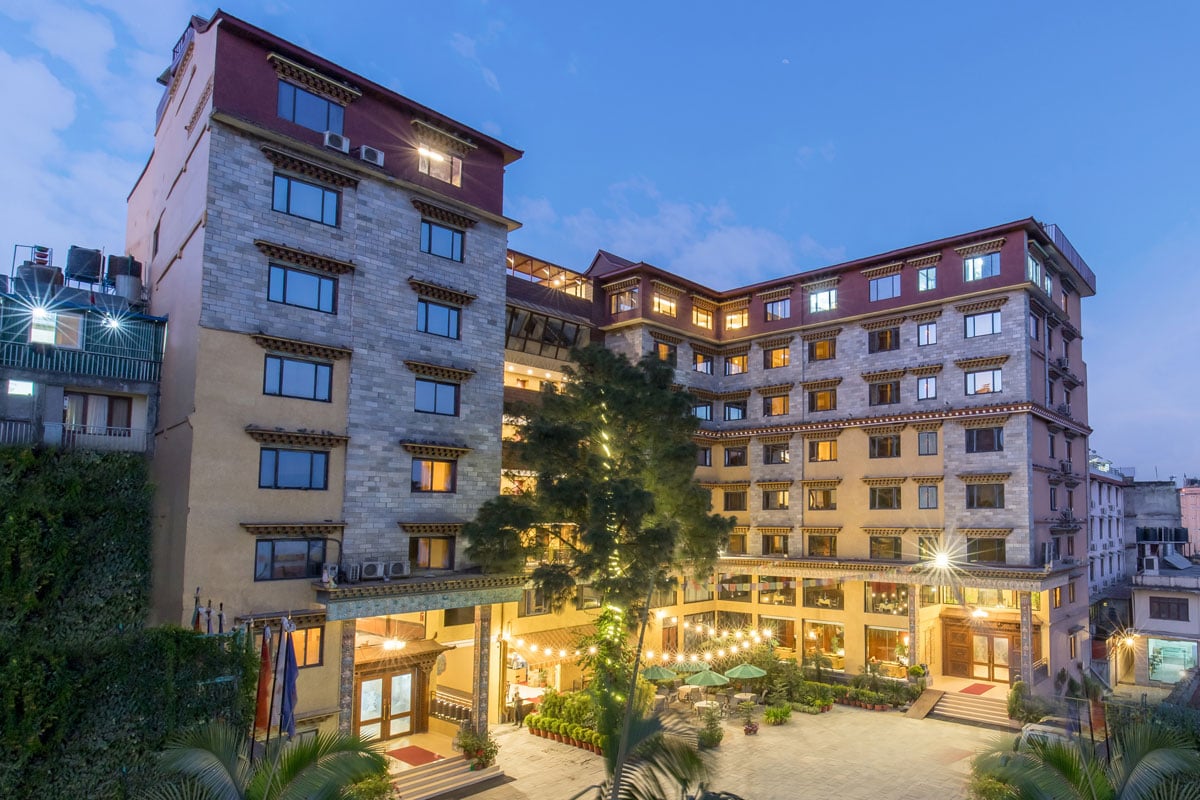
Hotel Tibet International

Hotel Tibet International

4 NIGHTS

Walking distance from the UNESCO Heritage Site of Boudhanath Stupa, Hotel Tibet International is a 4-star standard boutique hotel that showcases the Tibetan-Buddhist culture and heritage in Kathmandu. Inspired and decorated in Tibetan style.
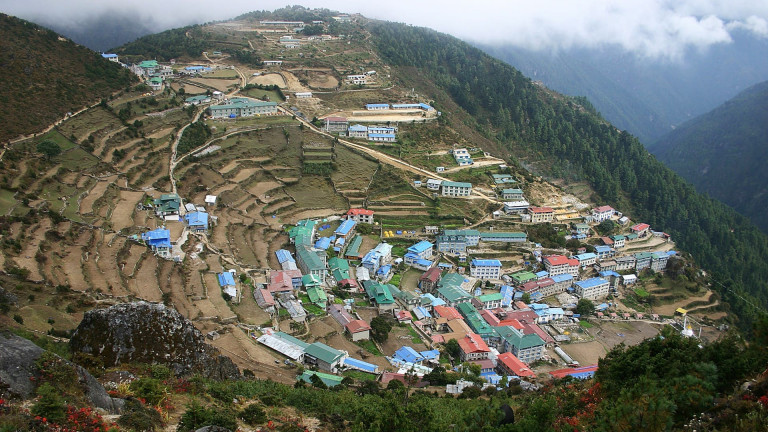
Namche Bazaar

Local Guest House 

12 NIGHTS

Tea houses are accommodations along trekking routes in Nepal that offer basic lodging and meals. All tea houses own and operate by local families. Every tea house has one large communal dining area with a wood-burning stove in the center. It’s a great spot to meet other trekkers, swap stories, warm up, and sip tea while you watch the sunset over the mountains.

These exact accommodations are not guaranteed. In some instances alternative accommodations of similar quality and location may be used.